ThePodcastHost.com
Educational Content Platform
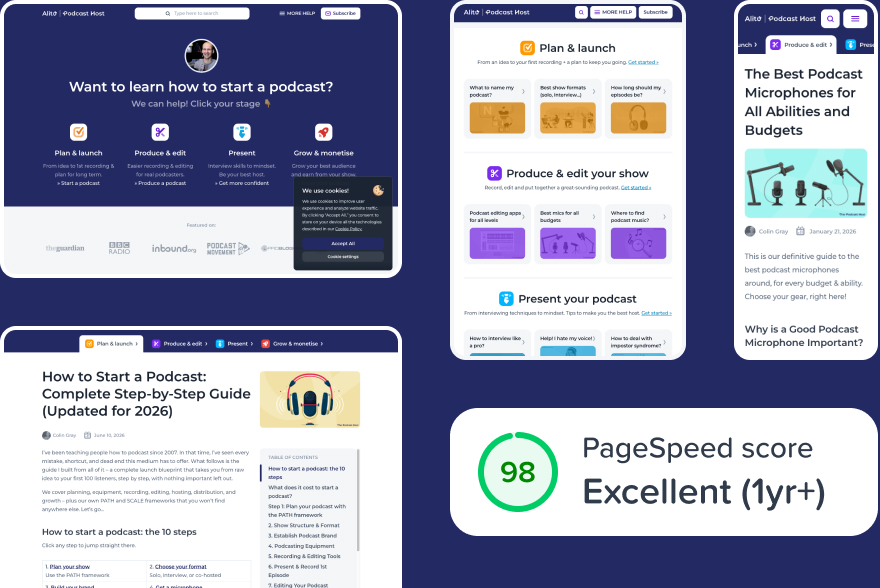
The Podcast Host is best described as a podcasting education website, aimed at helping anyone start, grow and improve podcasts. With over 1.6M unique visitors annually, it is seen as an authority in the podcasting world.
The Challenge
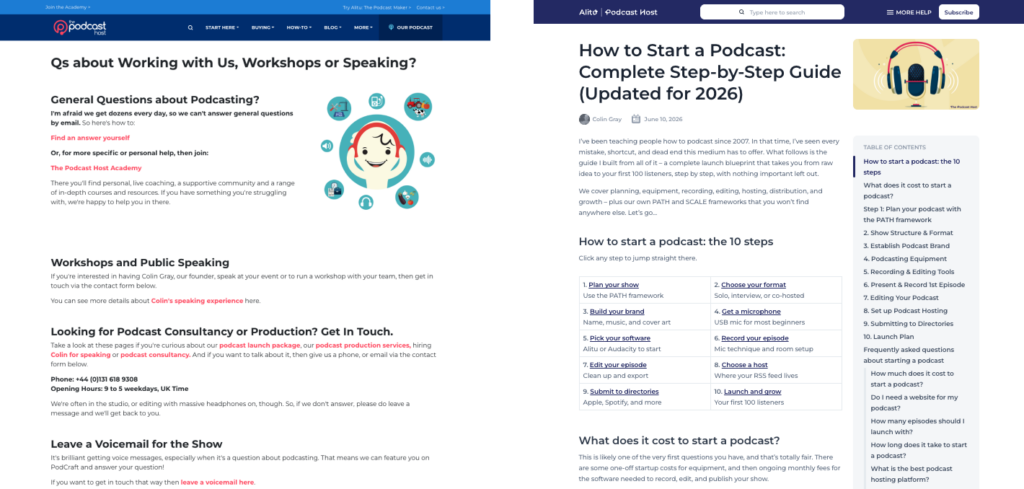
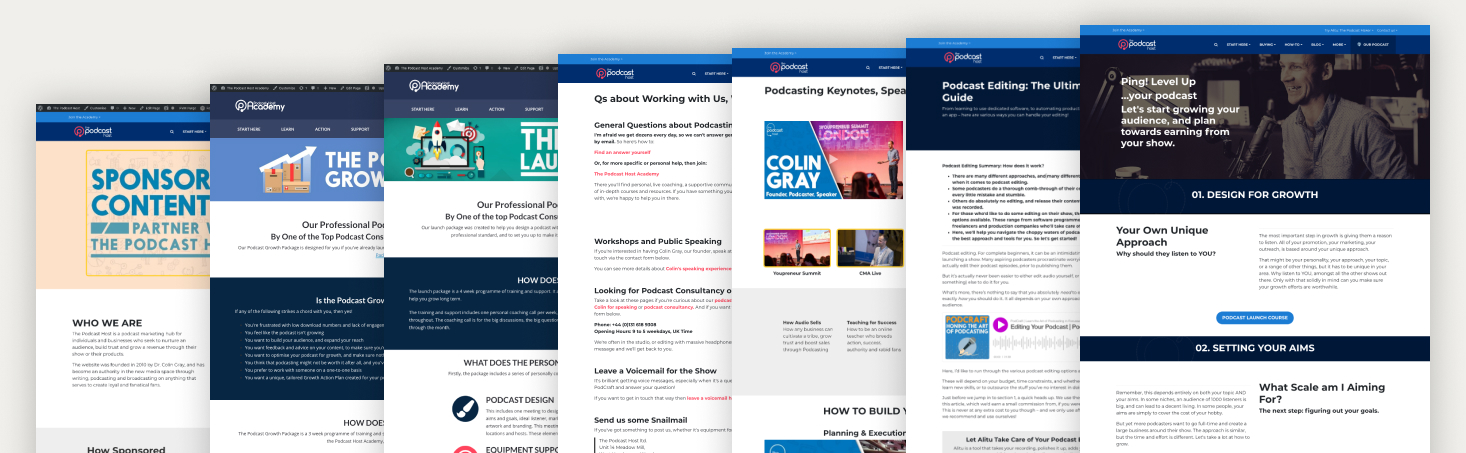
When I joined The Podcast Host, the website relied heavily on page-builder technology and third-party plugins. This resulted in inconsistent layouts, difficult maintenance, bloated markup and slow editing experience that delayed content production.
Scalable Design System
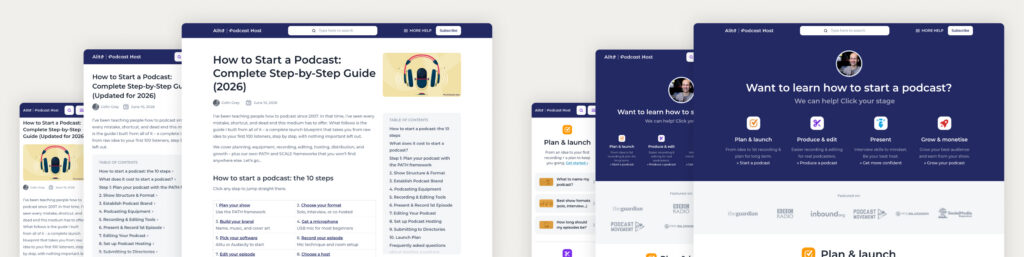
One of my first priorities was creating a more consistent visual language across the website. Rather than continuing to build pages individually, I established a reusable design system that standardised typography, spacing, colours and components.
This allowed us to:
- Create a more professional and cohesive user experience
- Improve consistency across hundreds of pages
- Reduce development time for new features and content
- Simplify long-term maintenance
Before:
After:
Rebuilding the Front-End Architecture
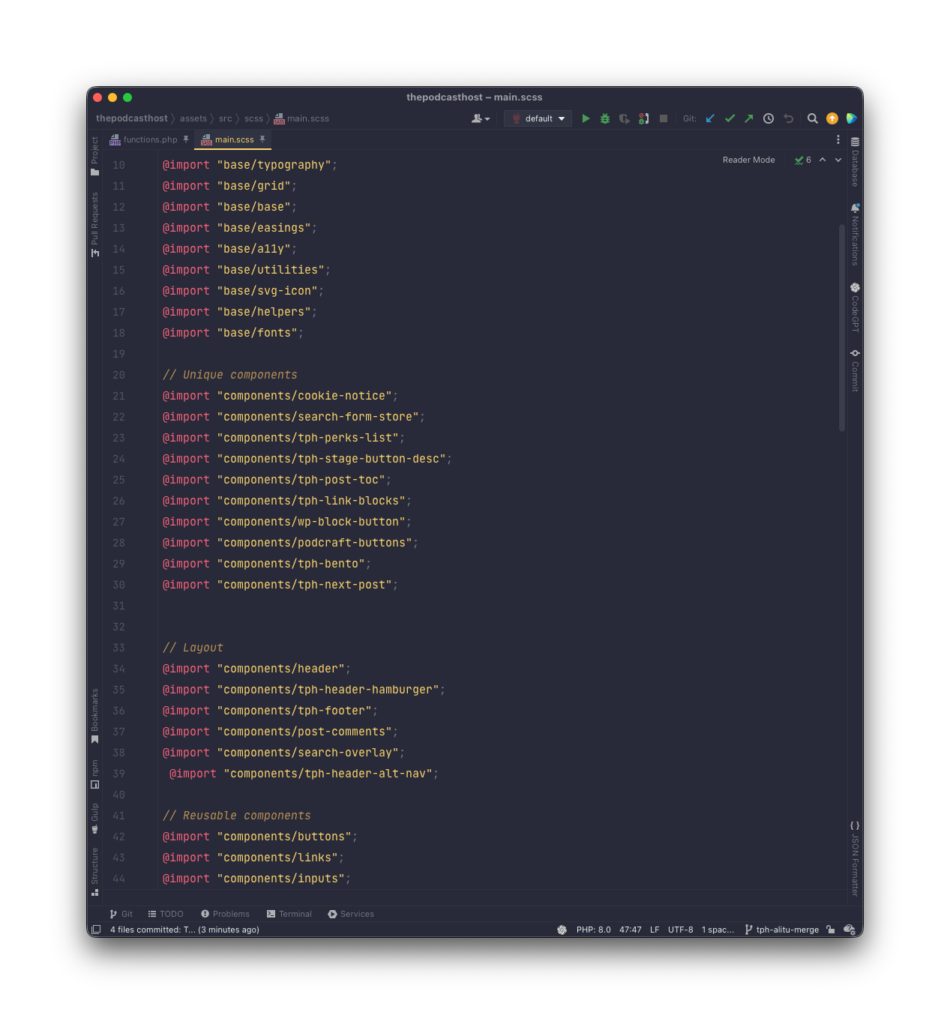
The existing website relied heavily on page-builder technology and plugin-generated markup. To improve maintainability and performance, I rebuilt large portions of the site’s front-end architecture using lightweight, custom-developed components.
This included:
- Refactoring CSS into a more structured and maintainable system
- Removing unnecessary dependencies
- Reducing conflicts caused by third-party code
By reducing reliance on plugins and generated markup, the website became easier to update, more predictable to work with and significantly lighter to load.
Editorial experience
The Podcast Host publishes a large volume of educational content (over 400 posts as of writing this) which makes the content creation workflow just as important as the public-facing experience.
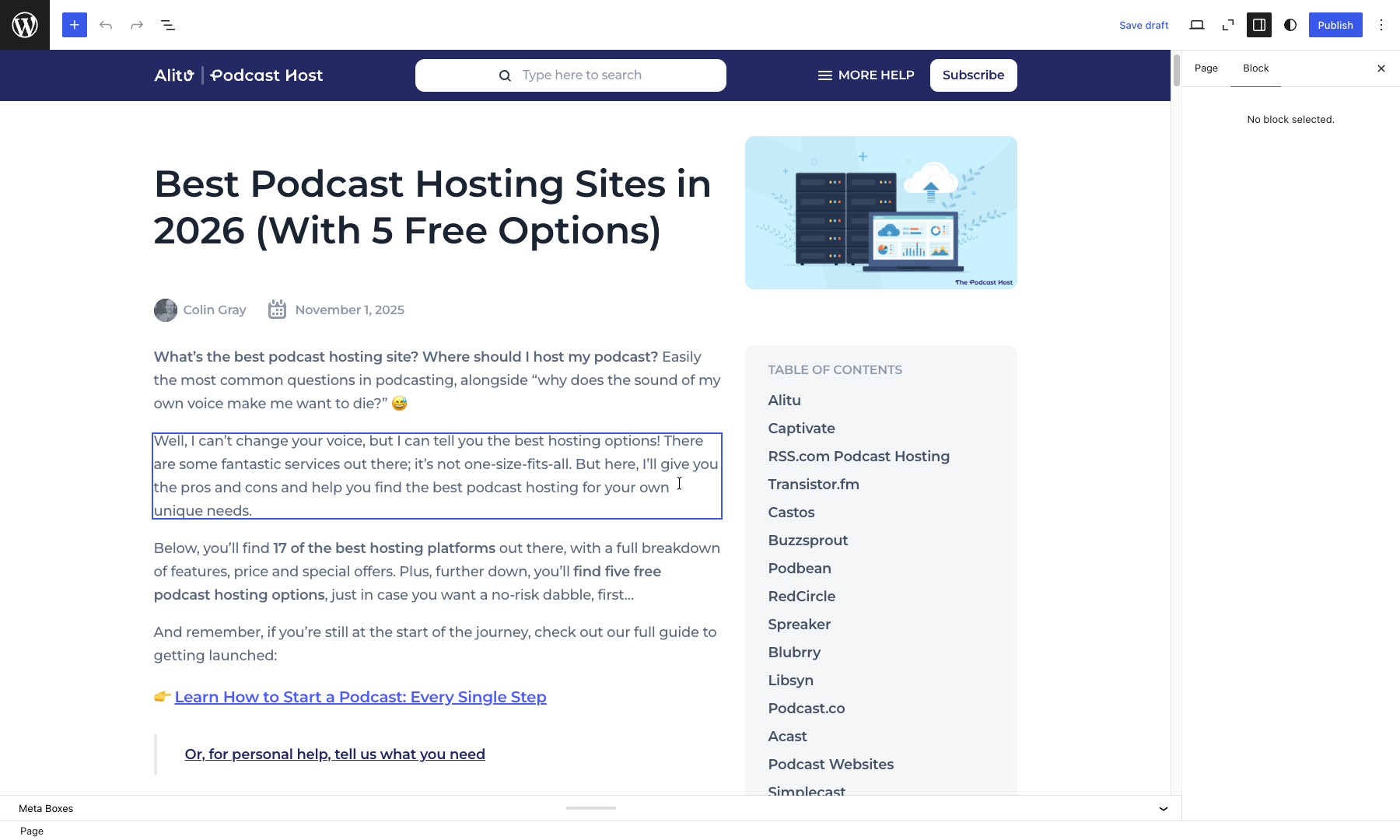
To improve efficiency for writers and editors, I migrated the site away from page-builder workflows and towards WordPress’s native block editor.
This gave content creators:
- A more reliable editing experience
- Greater flexibility when writing articles
- Reduced risk of formatting issues
Accessibility and Performance
Accessibility considerations became part of the development process rather than an afterthought. I introduced semantic HTML5 structures and improved content hierarchy throughout the website.
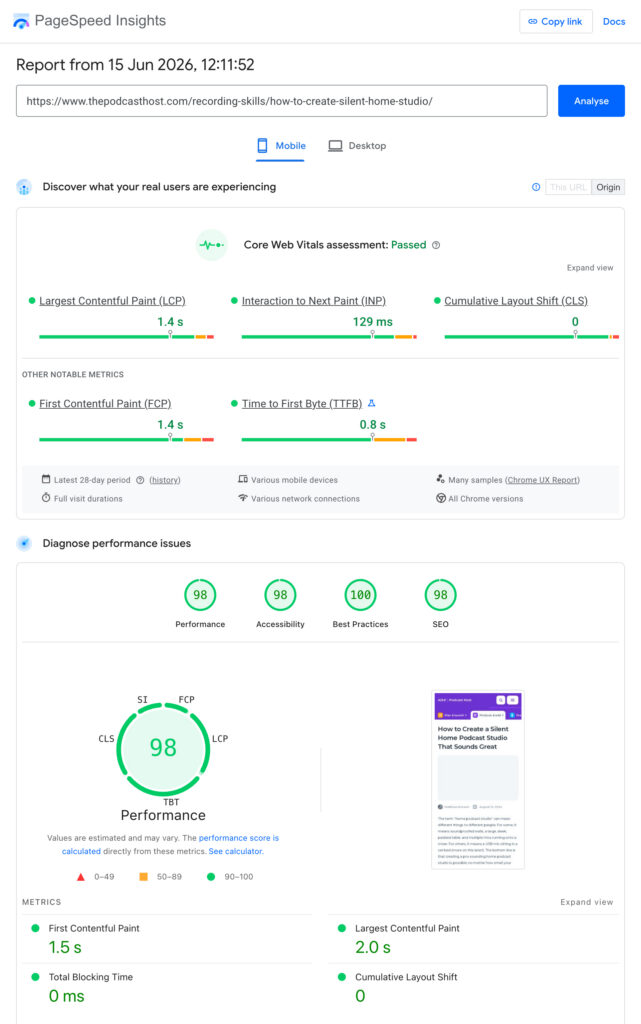
Performance was treated as a core feature of the website. Through front-end optimisation, CSS simplification, I consistently maintained Google PageSpeed scores above 90 across the platform for over two years.
Key improvements included:
- Support for assistive technologies (such as screen readers)
- Reducing CSS and JavaScript overhead and unnecessary plugins
- Maintaining strong Core Web Vitals (CLS, INP, LCP)
Custom Tools
I designed and developed custom interactive tools, including the Podcast Host Picker. The tool helped users identify suitable podcast hosting platforms based on their requirements, creating a more engaging and personalised experience than traditional content alone:
Marketing Landing Pages
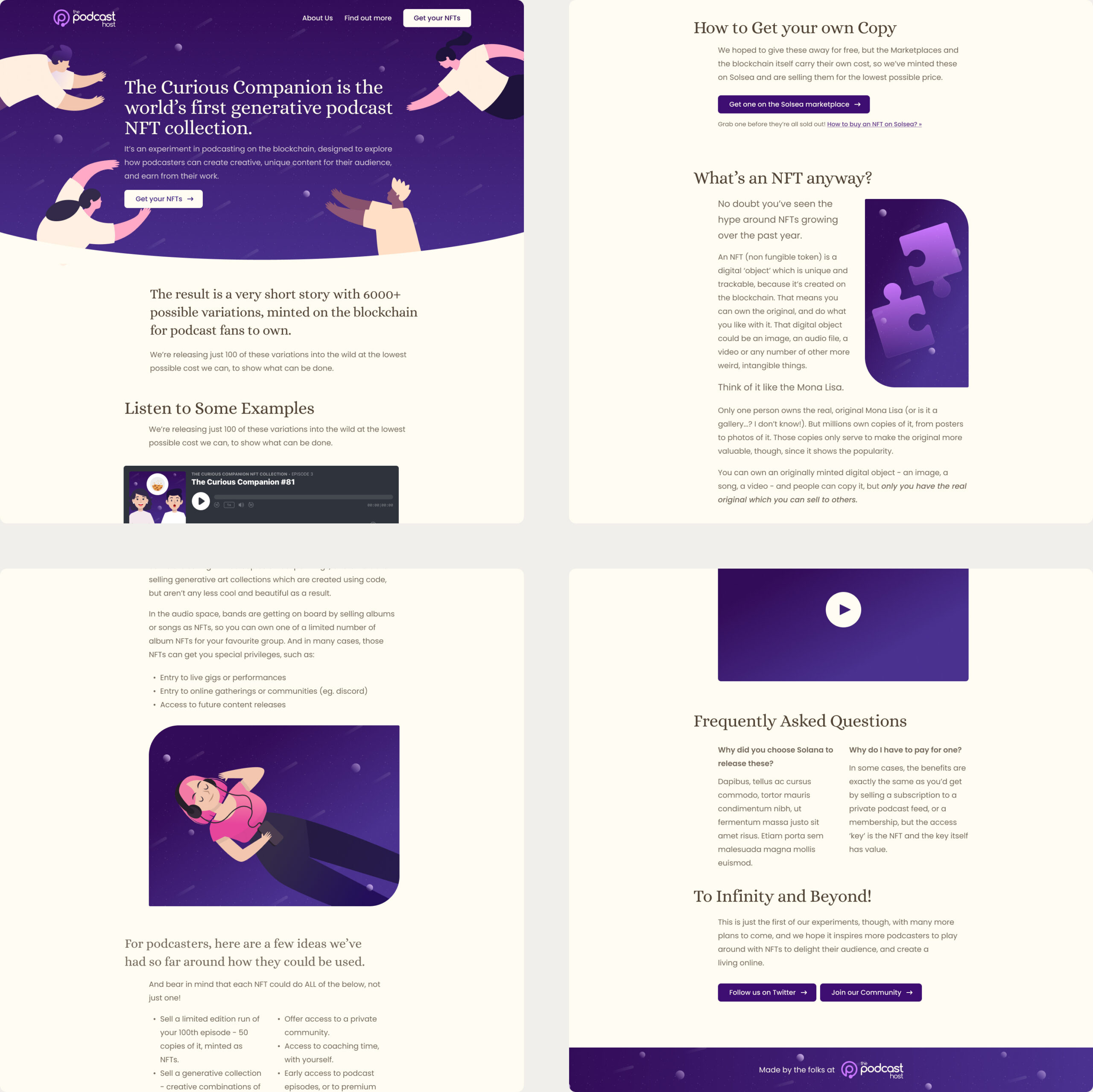
I collaborated on the design and implementation of campaign-specific landing pages, including promotional content around emerging podcast industry topics such as NFTs.
Learning Platform
I also contributed to the company’s learning platform and member experience.
Projects included:
- Redesigning sections of the academy dashboard
- Improving navigation and usability
- Implementing integrations with Circle.so using their APIs
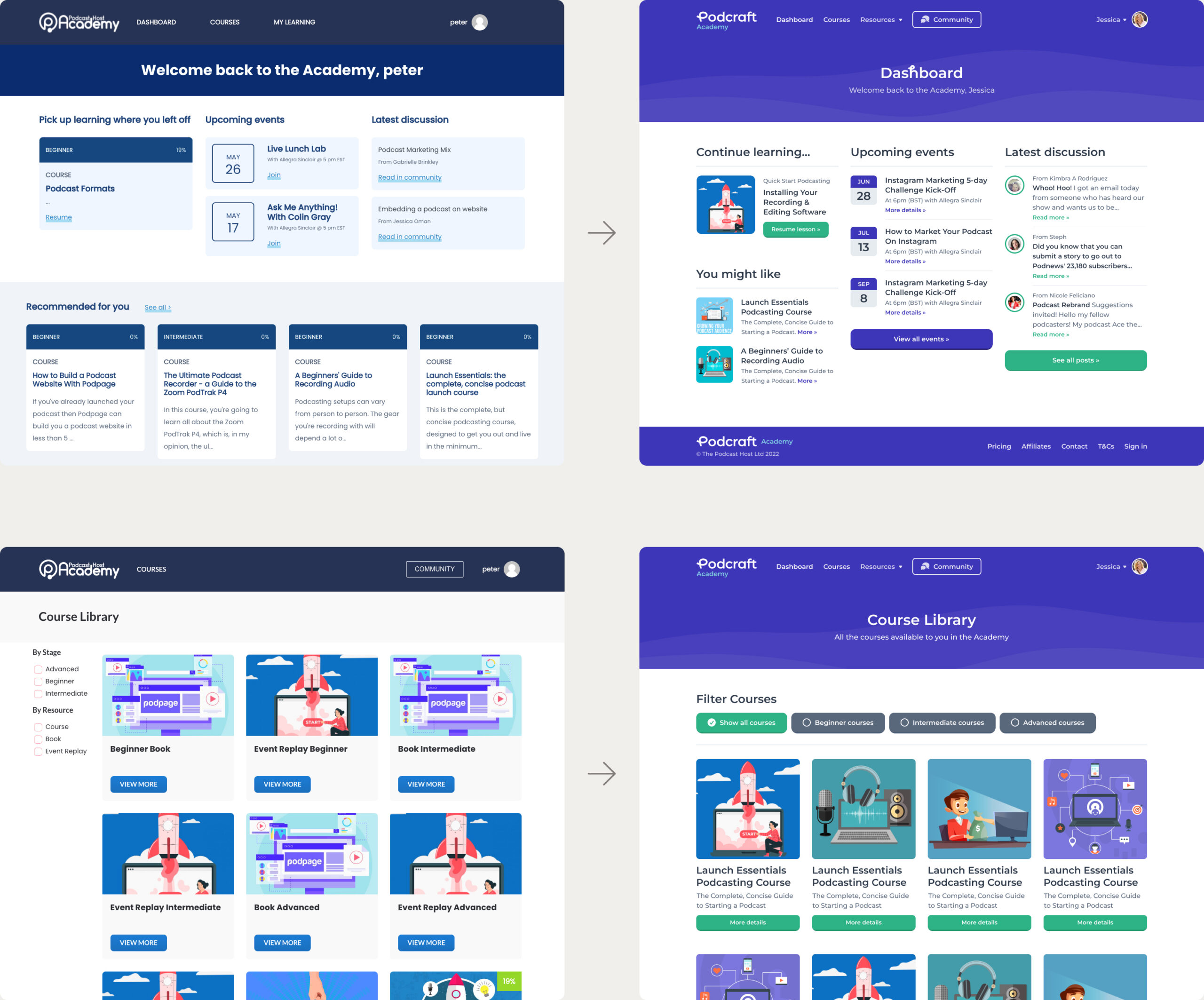
This helped create stronger connections between educational content and community engagement.
Results
Over several years, I helped transform The Podcast Host from a page-builder-driven website into a modern publishing platform.
Key outcomes included:
- Creation of a scalable design system
- Reduced reliance on third-party plugins
- Improved accessibility through semantic HTML
- Maintained 90+ PageSpeed scores for over one year
- Improved content publishing workflows
- Delivery of custom tools and landing pages
The result was a faster, more reliable and easier-to-manage platform that supported both business growth and day-to-day content operations.
Get in touch
I hope you enjoyed this case study and revisiting this chapter with me. If you like what you see here and want to get in touch, I’d love to hear from you.