Context & Objectives
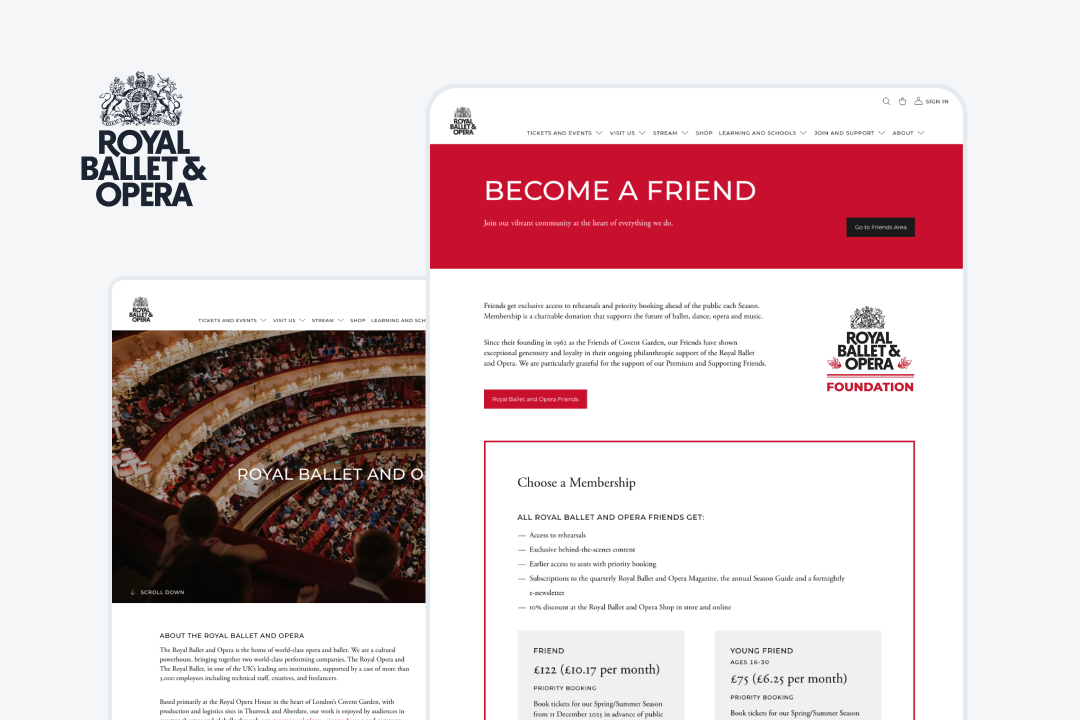
The Challenge: The RBO operates with a dual identity as both a business and a charity. The organisation needed to evaluate their website to ensure users could easily navigate, understand, and engage with their charitable activities.
Research Goals
- Improve the findability of key information regarding RBO.
- Examine the usability and clarity of the ‘About’ pages.
- Assess the discoverability and usability of the donation journey and pre-donation information.
- Explore the usability of the membership flow and user recognition of the fee as a charitable donation.
Method
Participants: A total of six individuals (one pilot tester and five participants) who reflect the target audience of occasional visitors and performing arts supporters.
Format: Moderated usability testing, utilising a mix of remote and in-person sessions.
Tasks: Participants completed 14 specific tasks designed to test information discovery, donation journeys, and the “Becoming a Friend” membership process.
Key Findings
#1 Friction when Comparing Memberships 🧐
Users struggled to identify the correct membership plan due to a confusing layout and ambiguous naming conventions.
Only two out of five participants successfully identified the correct plan for their needs. Additionally, users experienced a disruptive redirect to a vague sign-in page during the process.
#2 Pre-donation Content was Insufficient ❌
While the donation feature itself was highly discoverable, the pre-donation content lacked necessary details.
Participants noted the content’s vagueness regarding fund allocation and had to rely on a comprehensive annual report PDF to find the impact metrics they needed to feel confident.
#3 Dual Identity as an Entertainment Venue & Charity 💃
The website struggled to clearly differentiate between RBO the business and RBO the charity.
Two participants staunchly identified the RBO strictly as a business due to its reputation as a well-known venue, missing the charitable aspect entirely.
#4 Content Comprehension 📖
While large titles and imagery aided navigation, complex language hindered information extraction on the “About” pages.
The cognitive load required to parse the complex language resulted in some task failures and an average Single Ease Question (SEQ) score of 3.6.
Analysis:
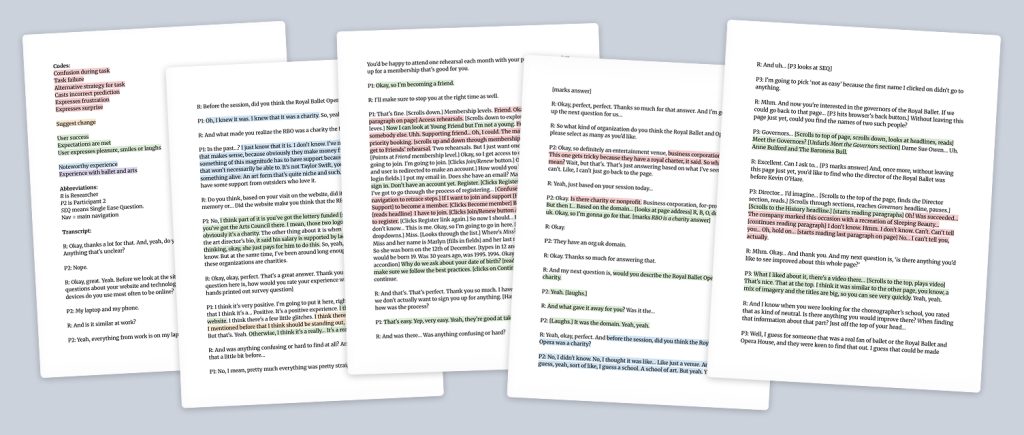
I transcribed the session audio using WhisperAI and annotated the text with key behavioural observations from the screen recordings. From this, I extracted positive insights and friction points using a custom coding framework—which can be seen on page 1, in the following image.
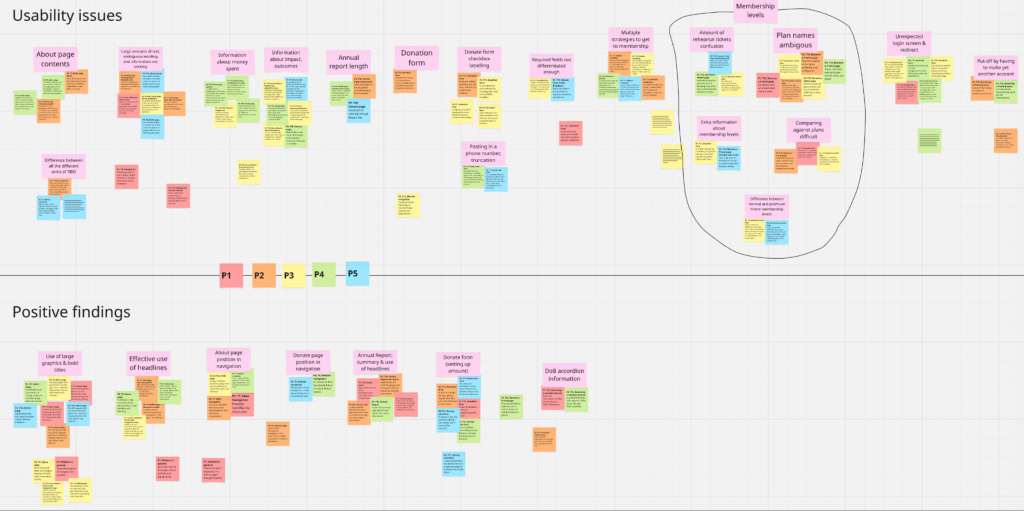
I transferred the initial findings into Miro and used affinity diagramming to group related issues:
I analysed the quantitative metrics, including task navigation paths and Single Ease Question (SEQ) scores, to measure overall usability performance.
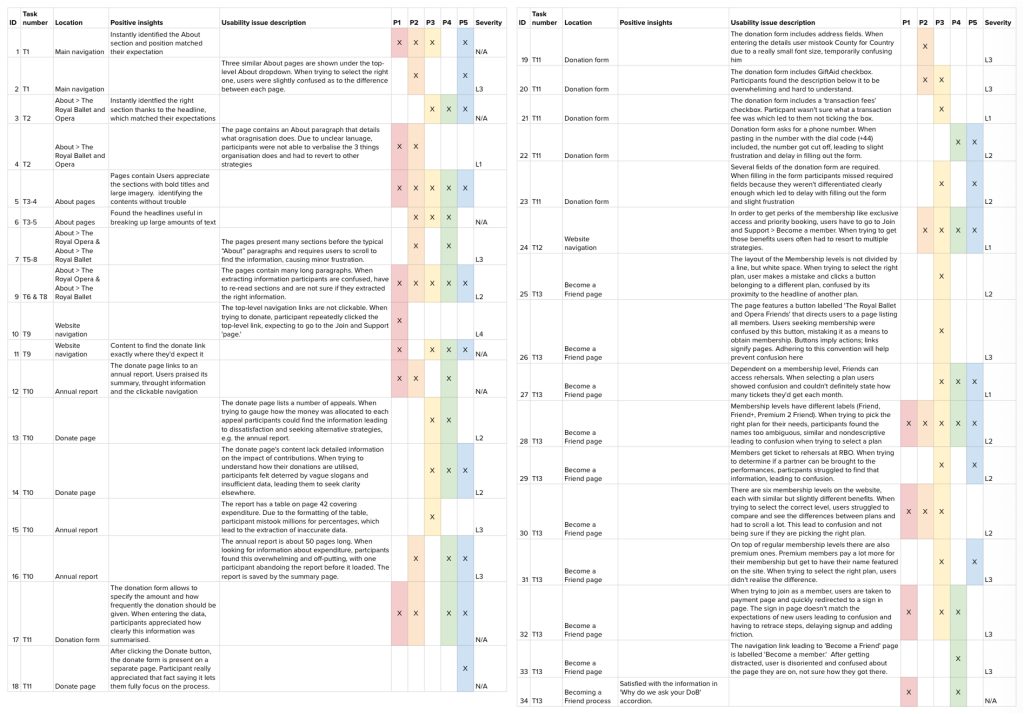
I compiled the final usability problems into a rainbow spreadsheet. Each issue was ranked using a standard severity scale to help stakeholders prioritise future design iterations effectively.
Recommendations
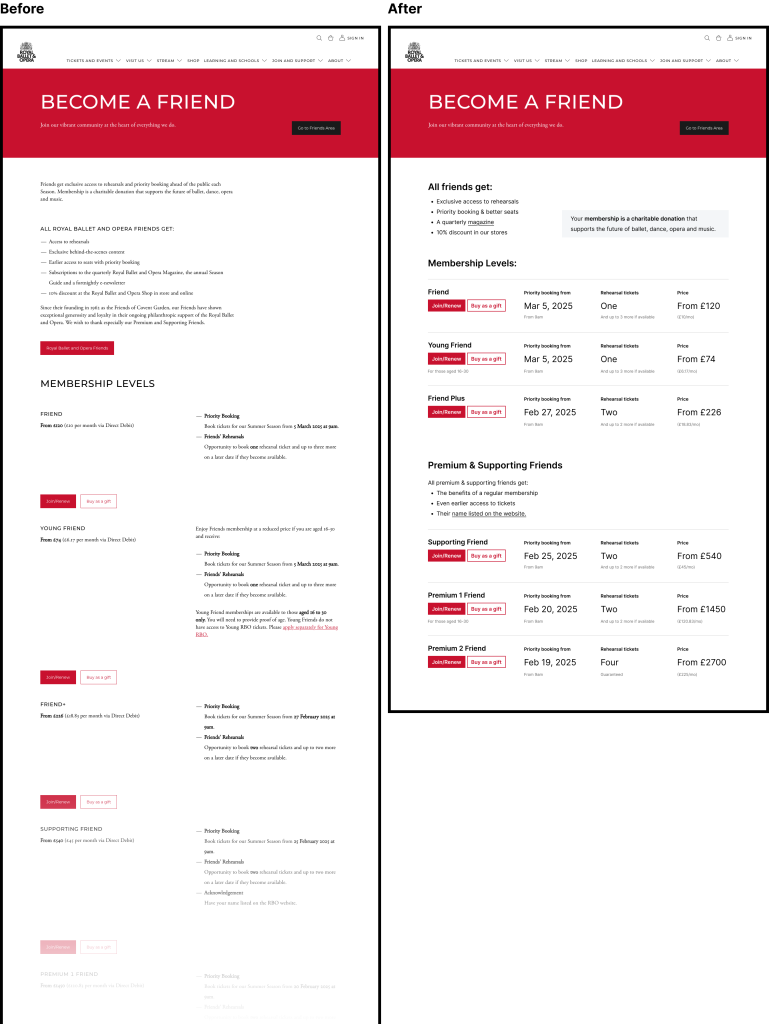
#1 Redesign the membership layout to feature a comparison table, making it easier for users to view ticket availability and key benefits at a glance:
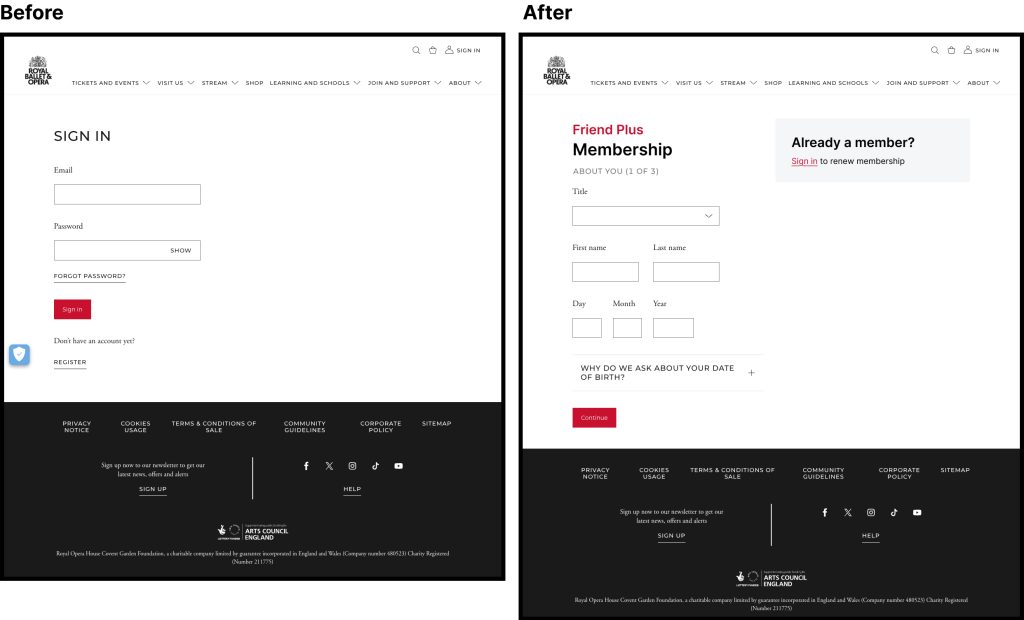
#2: Replace the disruptive sign-in redirect with a clear choice page featuring both a registration form and a sign-in button to align with user expectations.
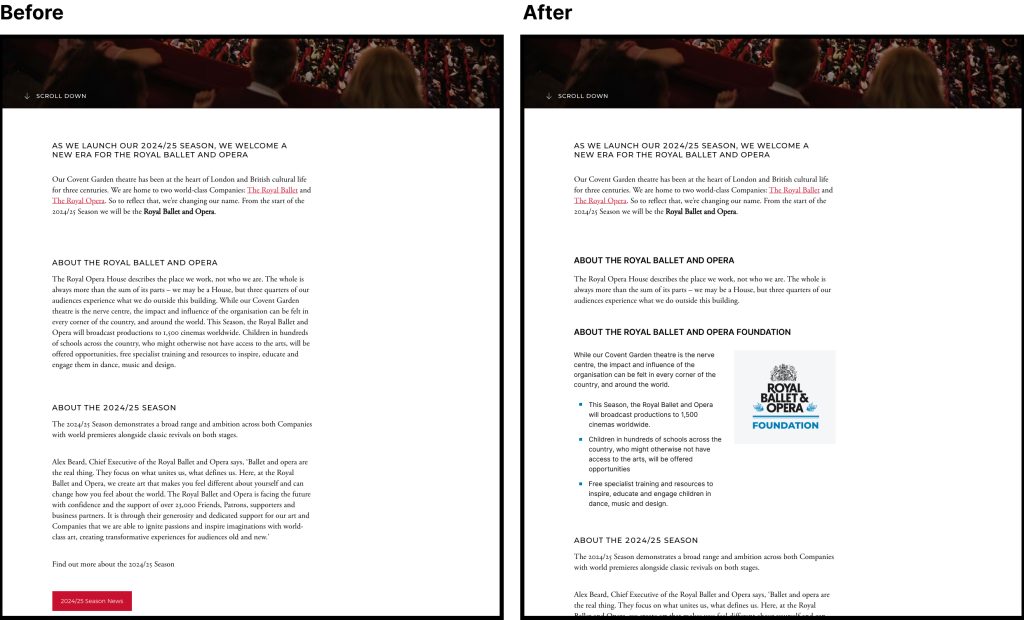
#3 Create a distinct brand identity, such as an “RBO Foundation” with a separate logo, to visually separate the business operations from the charitable mission.
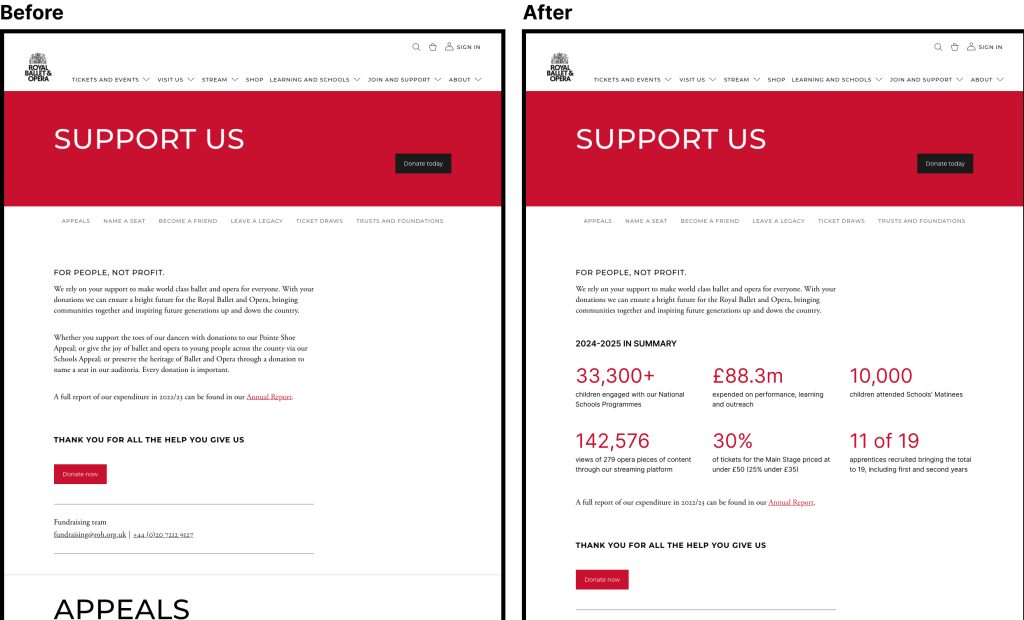
#4 Integrate a high-level summary of fund allocation and impact metrics directly onto the donation page to foster immediate donor trust.
Impact
Delivered critical, evidence-backed design solutions that were adopted and implemented by the client to improve their digital charitable experience.
Reflection
- Using a combination of both study-level and task-level measures, like the SEQ, helped provide a holistic view of the user experience and what aspects of the site contributed to poor scores.
- Annotating every small interaction in the transcripts allowed for scientific rigour but also took a lot of time and did not always lead to useful insights. In future, I will be more selective with what I log so the time can be used more effectively.
- Since the scope of this study was restricted to desktop devices, as an important next step I’d recommend testing the mobile experience. The complex navigation and large imagery will likely create different challenges on smaller screens.